
The HVAC Tool List: Day-One Essentials for New Techs
Ask five veteran techs for an HVAC tool list and you will get five different bags. However, the day-one core barely varies. Here is the version our instructors give every graduating cohort. It covers what a new technician genuinely needs on the first job and what the employer usually supplies. Finally, it shows how to spend where it counts.
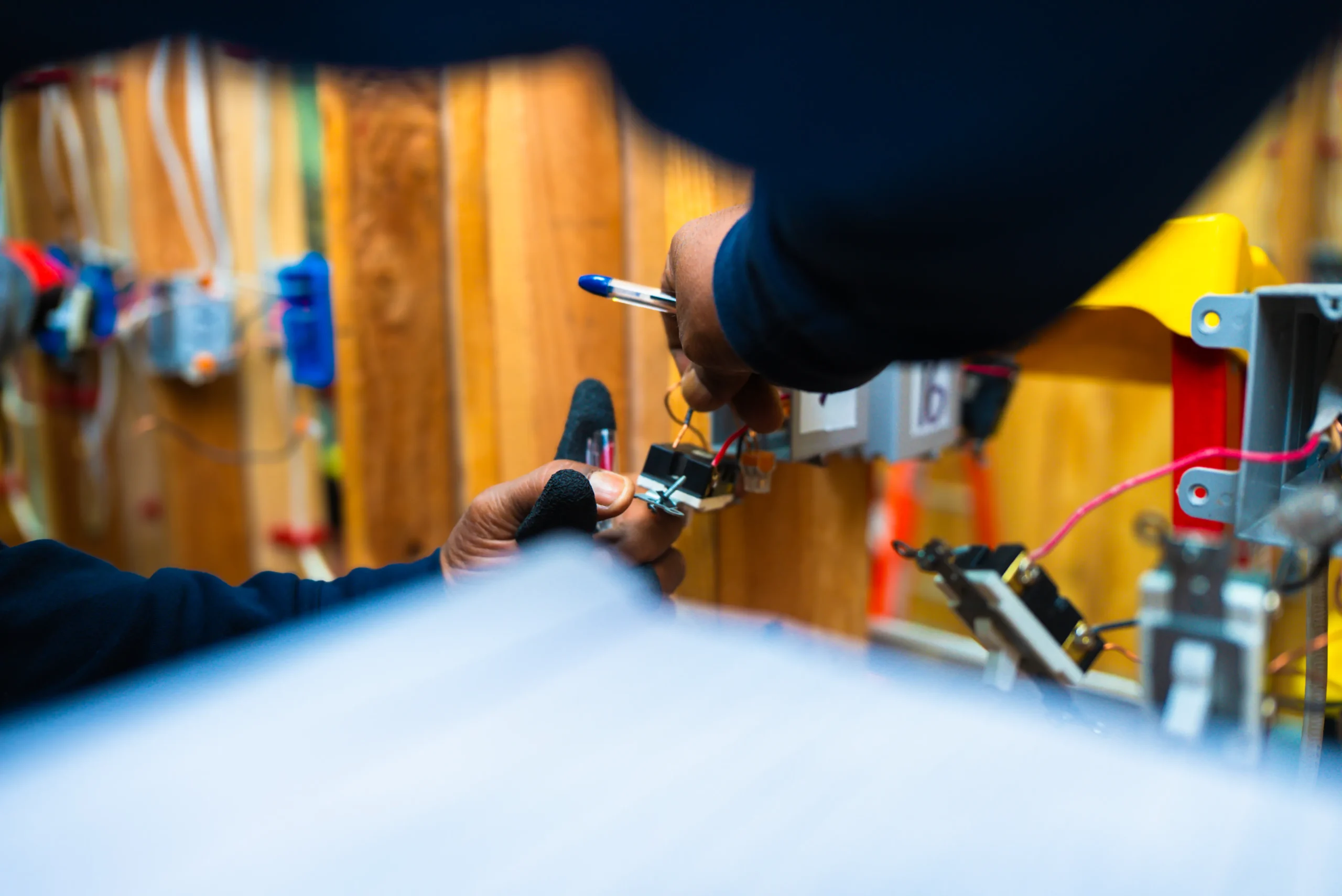
Above: the lab where every tool on this list gets introduced, used, and understood before you spend a dollar on your own.
The Day-One Bag
- Multimeter with clamp — your single most-used diagnostic tool; capacitors, voltage, amp draws all day.
- Non-contact voltage tester — the stay-alive tool. Check before you touch, every time.
- Screwdriver set / multi-bit driver — panel screws, board terminals, thermostat bases, endlessly.
- Nut driver set (1/4” and 5/16”) — the HVAC handshake; half the panels in this valley open with them.
- Pliers family — needle-nose, channel-locks, side cutters.
- Adjustable wrenches and a service wrench — valves, fittings, and the stubborn stuff.
- Thermometer probes — supply/return splits are bread-and-butter diagnostics.
- Flashlight or headlamp, tape measure, utility knife, cordless drill — the constant companions.
- A serious water jug — in Las Vegas this is a tool, not a joke; see our summer heat post.
What Waits for the Job (or the Employer)
Gauges and manifolds, recovery machines, vacuum pumps, torches, leak detectors, refrigerant scales — the expensive refrigerant-side equipment is typically supplied by employers, and the versions you eventually buy should match your actual lane (residential service vs. the commercial path in our comparison). New techs who blow $2,000 on a manifold set before their first paycheck usually discover the company van already carries a better one.
Spending Rules From the Instructors
Put real money in the multimeter — it is your stethoscope, and a flaky meter teaches you wrong lessons. Go mid-range on hand tools until the work votes on upgrades. Mark everything with paint pen immediately. Buy the comfortable version of anything you grip hundreds of times a week — strippers and drivers especially. And keep a cheap backup driver in the truck for the day the good one walks off a roof.
The Knowledge That Makes the Bag Work
A meter is only as smart as the hands holding it. Reading an amp draw means nothing until you know what that compressor should pull; a temperature split is trivia until the refrigeration cycle in your head turns it into a diagnosis. That is the entire case for training before buying: in our 12-week HVAC program every tool above gets wired into an understanding of the systems it serves — plus the EPA 608 certification that legally unlocks the refrigerant side of the trade.
Total Damage, Honestly
A sensible day-one HVAC kit lands in the low-to-mid hundreds — less than the mega-lists suggest, and trivially recovered once you are earning on the ladder in our salary guide. Budget tight? Sequence purchases around your financing plan and buy the meter first; admissions has helped students stage this for decades.
The Meter Deserves Its Own Paragraph
If this list has a hero, it is the clamp multimeter, so choose it like it matters. You want true-RMS accuracy, a clamp jaw that fits the tight spaces around contactors, temperature input for probe work, and a display you can read in a dark attic through sweat. Mid-tier models from the reputable meter brands hit all four without the flagship price. Then — and this is the part that separates techs — learn its every function until the meter feels like an extension of your diagnostic thinking rather than a gadget you consult. The lab exists to build exactly that reflex.
Packing Logic: The Two-Minute Rule
Veteran service techs organize bags around one principle: anything you touch on most calls should be reachable in under two minutes, in the dark, with one hand. Meter and tester ride on top, drivers and nut drivers in dedicated slots, the pliers family together, consumables (tape, wire nuts, zip ties, fuses) in one pouch you restock every Friday. The payoff is not neatness — it is call velocity: a tech who never hunts for tools runs an extra call or two per summer day, and in performance-pay shops that difference shows up directly on the paycheck.
Your First Truck Kit vs. Your Fifth
Accept that the bag evolves. Year one carries this list. Then year three adds the specialty tools your actual lane demanded — a residential tech’s coil-cleaning gear differs completely from a commercial tech’s belt tools and controls accessories. Year five is edited: the veterans carry less than the second-years, because experience deletes speculative weight. Buy for the job you have, not the career you imagine, and let the work itself write your upgrade list.
Frequently Asked Questions
What tools do I need to start in HVAC?
Day one: a clamp multimeter, voltage tester, drivers and nut drivers (1/4″ and 5/16″), pliers, adjustable wrenches, thermometer probes, flashlight, tape measure, utility knife, and a drill. Employers typically supply refrigerant-side equipment like gauges, recovery machines, and vacuum pumps.
How much does a starter HVAC tool kit cost?
Low-to-mid hundreds of dollars for a sensible kit. Spend most on the multimeter, go mid-range elsewhere, and skip big refrigerant-side purchases until your employer and lane are settled.
Do HVAC companies provide tools?
Most provide the expensive equipment — recovery machines, vacuum pumps, gauges, torches — while techs supply hand tools and meters. Ask each employer for their list before day one.
Should I buy HVAC tools before training?
No — the lab is fully equipped, and training teaches you exactly what each tool does and which version fits your hands. Buy near graduation with informed opinions instead of guesses.
Hands First, Then Hardware
Tour the campus, handle every tool on this list in the lab from the video above, and start the 12 weeks that make the bag make sense. Tuition is a fraction of what most Las Vegas programs charge — leaving budget for a very good meter.
