
EPA 608 Certification: Types, Test, and How to Get It in Las Vegas
If you want to work in HVAC, EPA 608 certification is the one credential you cannot skip. Federal law requires it for any technician who maintains, services, repairs, or disposes of equipment that could release refrigerants into the atmosphere. No certification means no legal refrigerant work — and for most employers, no job offer. Here is a plain-English guide to what it is, the four types, what the exam covers, and the smartest way to earn it.
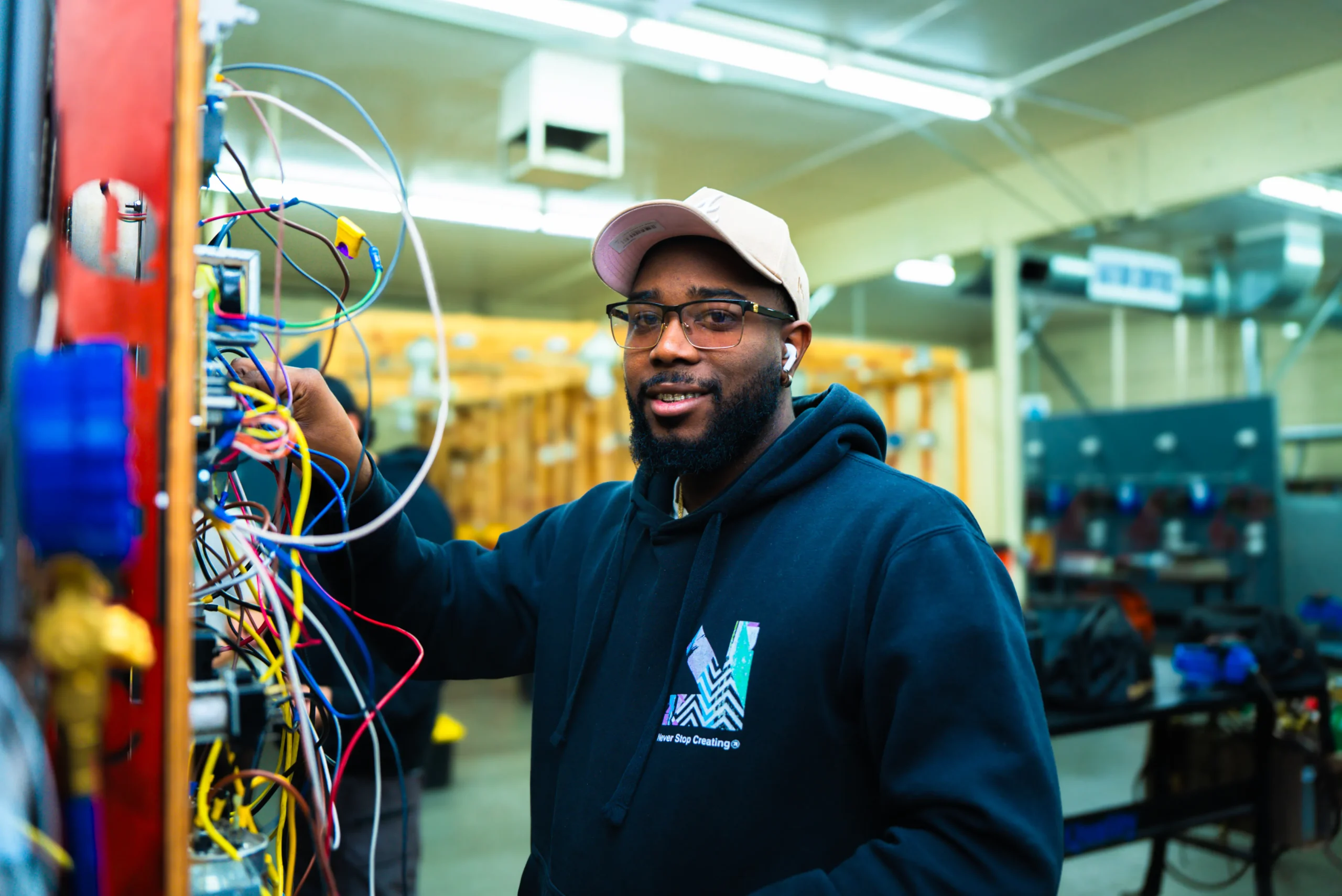
Above: the Las Vegas skills lab where our students practice the refrigerant recovery and handling skills the EPA 608 exam tests.
What Is EPA Section 608?
Section 608 of the federal Clean Air Act makes it illegal to knowingly vent refrigerants while servicing or disposing of air conditioning and refrigeration equipment. To enforce that, the EPA requires technicians to pass a certification exam proving they can handle refrigerants safely and legally. It is a federal credential, valid in all 50 states, and it does not expire.
The Four Types of EPA 608 Certification
- Type I covers small appliances — window units, domestic refrigerators, vending machines — containing five pounds or less of refrigerant.
- Type II covers high-pressure appliances, which includes most residential and commercial air conditioning and heat pumps. This is the workhorse certification for Las Vegas technicians.
- Type III covers low-pressure appliances, mainly the chillers found in large commercial buildings, resorts, and casinos.
- Universal means you passed Core plus all three type exams and can work on any equipment. This is what we recommend students pursue, and it is what serious employers prefer to see on a resume.
What the Exam Covers
Every candidate takes a Core section — ozone depletion basics, Clean Air Act rules, refrigerant recovery and recycling requirements, safety, and shipping — plus a section for each certification type. Questions are multiple choice. Expect topics like recovery cylinder handling, required evacuation levels, leak-rate thresholds for different equipment classes, and safe work practices around pressurized systems.
How Hard Is the EPA 608 Exam?
With focused preparation, very manageable. The technicians who struggle are usually the ones who tried to cram from a PDF the night before. The material makes far more sense when you have physically recovered refrigerant, pulled a vacuum, and weighed in a charge — the rules stop being trivia and start describing work your hands already know. That is the core of how we teach it: lab first, then the exam.
New Refrigerants Make This Matter More, Not Less
The industry is in the middle of a refrigerant transition, with lower-global-warming A2L blends entering equipment across the country. Technicians who understand the rules — and the reasons behind them — are exactly who employers want as these changes roll through Las Vegas job sites. Certification is the floor; staying current is the career habit that follows it.
How Certification Works at Quality Training Centers
EPA 608 exam preparation is built directly into our 12-week HVAC technician program — not sold as an add-on. You learn refrigerant handling on real residential and commercial equipment, prepare with instructors who have taken and taught the exam for years, and our team helps you schedule your proctored exam. You graduate with hands-on training and a federally recognized credential on your resume at the same time. It is one of the reasons employers respond well to our graduates — and it factors into the salary picture we cover in our HVAC pay guide.
Study Tips From Our Instructors
A few habits our instructors drill into every EPA 608 candidate. First, learn the recovery equipment physically before you memorize the numbers — evacuation levels stick when you have watched a gauge fall in real time. Second, group the rules by pressure category rather than memorizing them as a flat list; the exam is organized that way, and so is the logic. Third, take practice sections until the question phrasing feels familiar, because half of exam anxiety is format anxiety. Finally, sleep before the exam instead of cramming — this is a test of working knowledge, and working knowledge survives a night’s rest just fine.
What If You Do Not Pass a Section?
It is not a career-ending event. The exam is sectional, so a candidate who passes Core and Type II but misses Type III keeps what they passed and retakes only the section they missed. Our instructors review the missed material with students and get them rescheduled quickly. That said, most students who put in the lab hours and the practice sections pass what they attempt — preparation, not luck, is the variable you control.
Frequently Asked Questions
Does EPA 608 certification expire?
No. Once you pass, the certification does not expire. Staying current on new refrigerants, like the A2L blends now entering the market, is part of being a good technician but does not require re-certification.
Is EPA 608 a Nevada state license?
No — it is a federal certification valid in all 50 states. Nevada does not require a separate state license to work as an HVAC service technician for a licensed company, so this credential travels with you anywhere.
Can I take the EPA 608 exam without any training?
Legally, yes. Practically, employers can tell the difference between a technician who understands recovery because they have done it and one who memorized answers. Training first pays off in interviews and on the job.
Which EPA 608 type should I get?
We recommend pursuing Universal certification — Core plus all three types — so no equipment category is off-limits to you. It is the strongest signal you can send a Las Vegas employer.
Is EPA 608 preparation included in the Quality Training Centers HVAC program?
Yes. Exam preparation is built into the 12-week program, and our team helps you schedule your proctored exam. There is no separate prep course to buy.
Earn It the Smart Way
The certification is required; the competence behind it is what employers actually pay for. Get both at once: schedule a tour of our Las Vegas campus, see the lab in the video above in person, and ask our instructors anything — including about financing options and workforce funding like WIOA that can help cover training.
