
From Navy Vet to the Skilled Trades: A Veteran Career Change Story
The hardest part of leaving the military is not the paperwork — it is the question of what you are now. On this episode of our podcast, a Navy veteran talks through his answer. In short, he made a veteran career change into the skilled trades in Las Vegas. As a result, his service years became an asset instead of a resume gap.
The Transition Trap He Avoided
Plenty of veterans land in the first job that will have them — security, warehouse, driving. Then they wake up three years later in work with no ladder. Not because they lack ability, but because nobody handed them a map. His move was different: he treated the transition like a mission with an objective. He picked a skill the civilian economy permanently needs. Then he executed a 12-week plan to get it. The episode covers how he chose, and why speed mattered to him.
What the Navy Taught Him That the Lab Confirmed
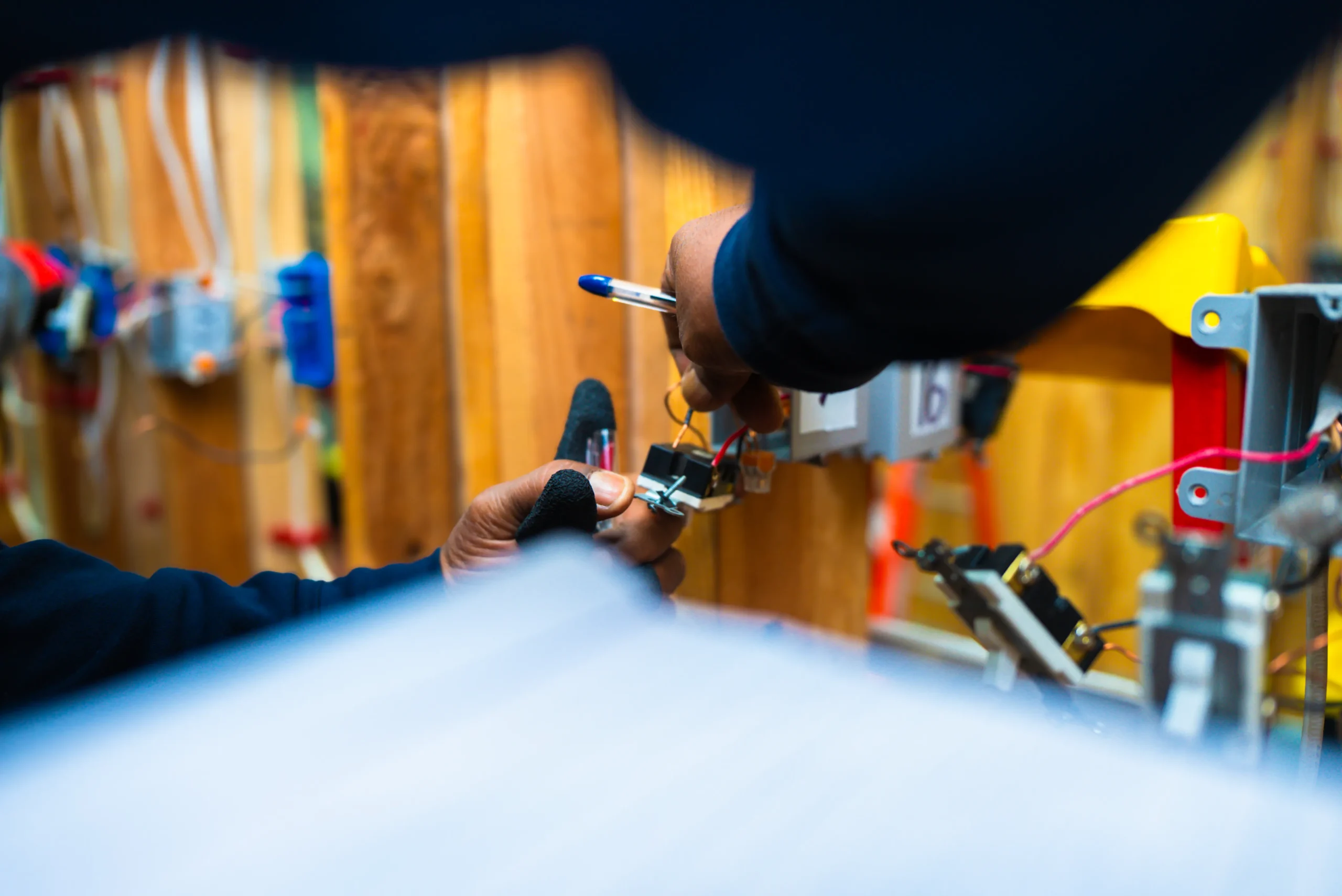
Watch him describe the crossover: procedures followed exactly when safety demands it, equipment respected because failure has consequences, discomfort tolerated without complaint, teams functioning under pressure. Instructors see it in every veteran cohort — they show up on time, they maintain their tools, they ask precise questions. The trades do not ask veterans to become someone new. They ask them to keep being exactly who the service built.
Paying for It: Benefits He Had Already Earned
His training was not a financial leap of faith — it was benefits he had earned, finally used. VA education benefits can apply toward approved career training, veterans get priority of service in workforce programs like WIOA, and our tuition runs a fraction of what most Las Vegas programs charge to begin with. We wrote a full guide on using VA education benefits for trade school; his story is that guide with a face on it.
Why Las Vegas Is a Strong Landing Zone for Vets
This valley suits transitioning military unusually well. Nellis and Creech keep a large military community rooted here. The trades economy runs deep — resorts, hospitals, data centers, and construction that never stops. Employers openly recruit veterans for facilities and service roles where reliability is the whole job description. And the trades themselves offer what many vets say they miss most: crews, standards, and work that visibly matters.
His Advice to Vets Still Deciding
Watch the episode for his full answer, but the compressed version lands hard: do not drift into the first job that takes you — deploy into one on purpose. Twelve weeks is shorter than any school you attended in the service. The benefits are already yours; the only waste is leaving them unused. And the trades give you back the thing civilian work so often lacks — a mission you can point at when the day ends.
What His Path Looked Like, Step by Step
- Verify benefits through the VA and bring the paperwork to a campus visit.
- Pick the trade after standing in both labs — our HVAC vs. electrical comparison frames the choice.
- Train for 12 weeks with schedules that flex around work and family.
- Interview with placement assistance at employers who actively seek veterans — and start climbing the ladder mapped in our career guides.
The First 90 Days After the Uniform
Transition counselors talk about the “first 90 days” as the window that sets a veteran’s civilian trajectory, and his experience backs it up. Ninety days spent applying to everything and hearing nothing erodes confidence fast; ninety days spent inside a training plan builds it daily. The structure itself — class times, skill benchmarks, an exam date, a graduation — replaces the scaffolding the military used to provide, which is half of why veterans describe trade school as the easiest civilian institution they have ever navigated. There is a schedule, there are standards, and there is a mission. It is familiar ground.
For the Spouses and Families Reading This
Career transitions are family decisions, and military families have already carried enough uncertainty. Here is what the 12-week model offers them: a fixed, short timeline instead of years of tuition; schedules that leave room for work and kids; benefits and funding that keep the family budget intact; and at the end, a career in a city where the skill cannot be outsourced, downsized to a laptop, or moved to another duty station. Several graduates have told us the tour that convinced them was the one their spouse attended too. Bring yours.
The Brotherhood Transfer
One last thing veterans consistently report finding again in the trades: the crew. Good job sites run on the same trust, dark humor, and mutual coverage that made service bearable — people who watch your six on a ladder the way squadmates once did elsewhere. Civilian offices rarely replicate it; trade crews do it naturally. For many veteran graduates, that recovered camaraderie matters as much as the paycheck.
Frequently Asked Questions
What are the best trades for veterans after the military?
HVAC and electrical work consistently top the list: both reward military discipline and procedures, both are in permanent demand in Las Vegas, both can be entered after 12 weeks of training, and both offer clear advancement ladders toward supervision or business ownership.
Can veterans use their benefits for trade school?
Yes — VA education benefits can apply toward approved career training programs, and veterans also receive priority of service in workforce funding programs like WIOA. Bring your paperwork to a campus visit and admissions will map what applies.
How do I translate military experience for trade employers?
Reframe service in employer language: preventive maintenance, troubleshooting under deadline, safety compliance, zero-failure standards. Our placement team helps every veteran graduate build a resume that pairs that record with a fresh trade credential.
Is Las Vegas a good city for veterans entering the trades?
Unusually good: a large military community around Nellis, employers who actively recruit veterans, and a trades economy — resorts, hospitals, construction, data centers — that generates steady demand year-round.
Your Next Duty Station
If his story rhymes with yours, take the same first step: schedule a tour, bring your DD-214 and benefits questions, and leave with a plan. Explore the HVAC and electrical programs, and hear more veteran stories on our YouTube channel. We have trained Las Vegas veterans since 1994 — and we take that seriously.
