
HVAC Troubleshooting 101: How Techs Think Through a Dead System
Here is the secret that separates technicians from parts-changers: HVAC troubleshooting is not a memory game, it is a thinking method — ordered, measurable, and learnable. Walk through a dead-system call the way our instructors teach it, and you will understand why diagnostic thinkers own the best wages in this trade.
Above: the episode where diagnostic temperament — the “solving mysteries” appetite — helps students pick their trade. This post is that temperament, systematized.
Rule One: Cheap Checks First
A no-cool call opens with the humble suspects, always: thermostat set and powered? Filter choked? Breakers on — both air handler and condenser? Disconnect seated? Float switch tripped on a clogged condensate line? An embarrassing share of “dead systems” resolve right here, which is why the sequence starts cheap: diagnosing from the expensive end wastes the customer’s money and the tech’s credibility. Ordered thinking is the first thing interviewers listen for — now you know why.
Rule Two: Split the System Like a Search Party
Real faults get found by bisection, not wandering: is the problem airflow, refrigerant, or electrical? Three questions sort it — is air moving (blower, ducts, filter)? is the compressor running (electrical: contactor, capacitor, windings)? and what do the line temperatures suggest (charge, restriction, metering)? Each answer eliminates a third of the suspect map. The diagram fluency post covers the electrical branch’s foundation; the refrigeration cycle — drilled from week one of training — covers the rest.
Rule Three: Measure, Never Vibe
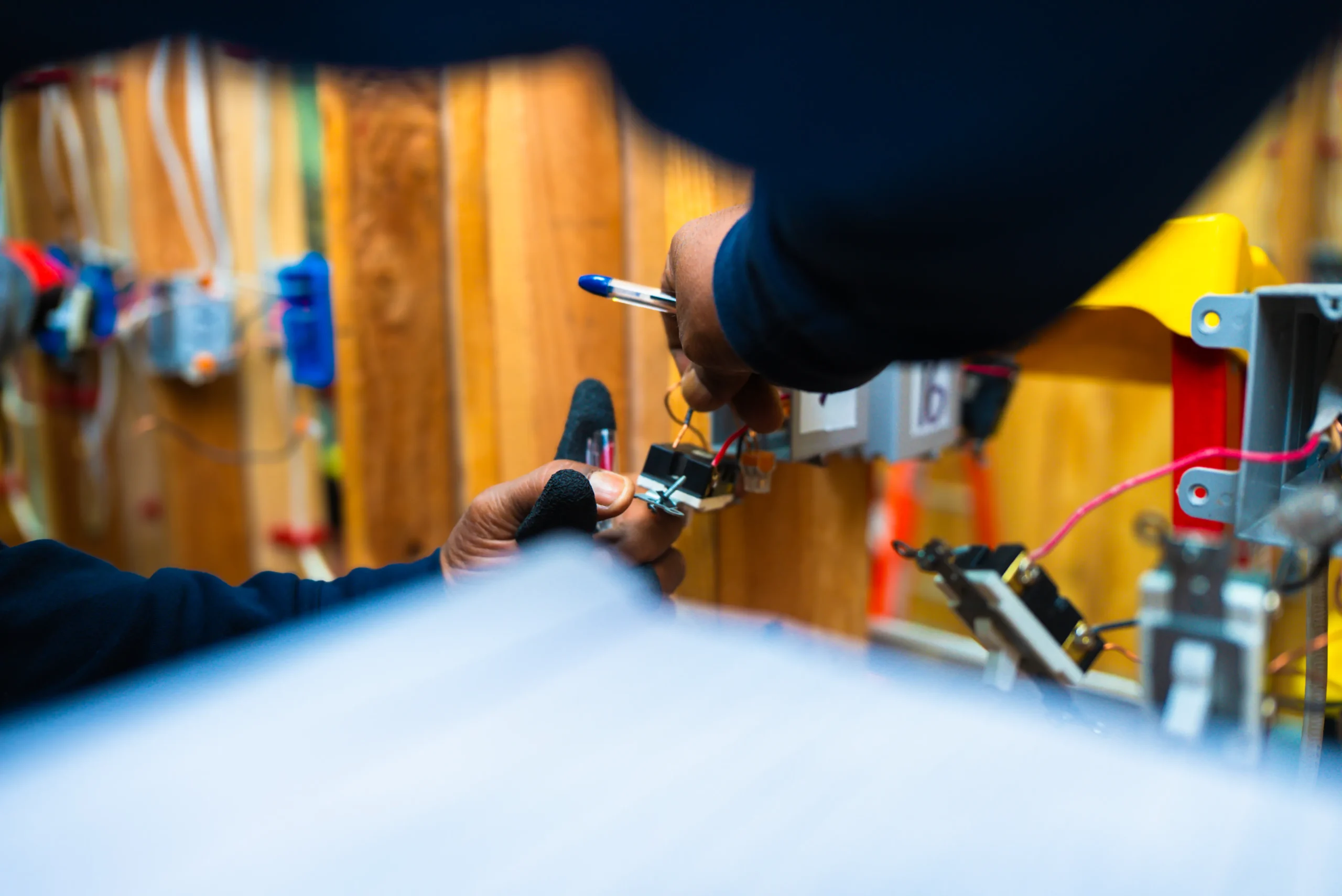
The parts-changer swaps the capacitor because “it’s usually the capacitor.” The technician meters it — microfarads against nameplate — and knows. Amp draws against rated load, temperature splits across the coil, superheat and subcooling telling the refrigerant’s story: every measurement converts opinion into fact, and facts stack into diagnoses that survive callbacks. This is also the safety discipline wearing its diagnostic hat — the same verify-before-touch reflex, aimed at truth instead of just survival.
Rule Four: Find the Killer, Not Just the Body
The mark of a real diagnostician: asking why the part died. A failed capacitor with a struggling condenser fan motor behind it; a dead compressor whose true killer was years of low charge nobody fixed; a board fried by a shorted low-voltage wire that will fry its replacement next week. Root-cause thinking is the difference between a repair and a return visit — and it is the habit that builds the callback-free reputations our 90-day guide shows employers promoting.
Why This Method Is the Career
Every rung of the HVAC pay ladder is really a diagnostic rung: service techs out-earn installers because they diagnose; seniors out-earn juniors because they diagnose faster; controls specialists earn premiums for diagnosing logic as well as machinery. The method compounds — every solved system adds a pattern to the library, and the library is the asset no employer can repossess. Twelve weeks builds the method; a career compounds it.
The Customer Is Part of the Diagnosis
An underrated diagnostic instrument: the homeowner. “When did it stop cooling? Any noises before? Has anyone worked on it recently?” Thirty seconds of good questions routinely cuts the suspect map in half — the breaker that trips every afternoon points somewhere very different than the system that faded over weeks. Techs who interview before they meter diagnose faster and, as a bonus, make customers feel heard — the trust dividend our graduates keep discovering converts into reviews and referrals.
Practice the Method Before the Meter Matters
You can rehearse diagnostic thinking tonight, no gauges required: pick any broken thing in your life — a car that hesitates, a laptop that overheats — and run the sequence: cheap checks, bisect the system, demand a measurement before believing a theory, ask what killed the part. The method generalizes because it is just disciplined reasoning aimed at machinery. People who discover they enjoy this loop tend to thrive spectacularly in the lab — and the lab is where the loop gets its professional-grade tools.
When the Method Says “Replace, Don’t Repair”
Mature troubleshooting includes knowing when to stop: a fifteen-year-old system with a dead compressor, obsolete refrigerant, and rotted duct connections is not a repair puzzle — it is a replacement conversation, delivered honestly with numbers the customer can weigh. Techs who push heroic repairs on dying systems win the invoice and lose the relationship; techs who counsel the economics straight become the company whose replacement quote gets trusted. The diagnostic method’s final step was never “fix at all costs.” It was “tell the truth about what you found.”
The Confidence Curve
New techs often confess the fear underneath the questions: what if I freeze on a real call? The honest reassurance is structural — the method is exactly what prevents freezing, because it always supplies a next step. You never stand paralyzed before a mystery; you run the sequence, and the sequence produces either an answer or a narrower mystery. Confidence in this trade is not bravado; it is trust in a procedure that has never once failed to advance. The lab installs the procedure. The first hundred calls install the trust.
Frequently Asked Questions
What is the first step in HVAC troubleshooting?
Cheap checks: thermostat settings and power, filter condition, breakers, disconnect, and condensate float switch. A large share of no-cool calls resolve at this stage — which is why professionals never start at the expensive end.
How do techs narrow down an HVAC problem?
By bisection into airflow, electrical, and refrigerant branches: is air moving, is the compressor running, what do line temperatures say. Each answer eliminates suspects until measurements confirm the fault.
What is the difference between a parts-changer and a technician?
Measurement and root cause: technicians verify components with meters against specifications and ask why a part failed, preventing repeat failures. Parts-changers guess, swap, and generate callbacks.
Can troubleshooting really be taught in 12 weeks?
The method — ordered checks, bisection, measurement, root cause — is absolutely teachable, and lab repetition on deliberately faulted systems builds it fast. The pattern library then compounds across a career.
Learn to Think in Systems
If reading this felt like fun rather than homework, the trade is calling you. Tour the lab where deliberately broken systems teach the method, and start the twelve weeks that turn puzzle appetite into a paycheck. A fraction of the usual Las Vegas tuition; financing available; diagnostic thinkers built since 1994.
